
A box of chocolates can be a simple purchase, a thoughtful gift, or a reflection of a brand’s identity. In premium retail and corporate gifting, packaging often shapes that first impression before the recipient even tastes the chocolate.
For chocolate brands, choosing the right luxury chocolate gift box involves more than selecting an attractive design. The box needs to present the chocolates beautifully, protect them during handling, and suit the occasion for which they are purchased. For businesses ordering in bulk, it must also meet practical requirements for customization, production consistency, and delivery.
So, what makes a chocolate gift box suitable for premium retail and corporate gifting? The answer lies in the balance between presentation, functionality, and brand value.
🎁 1. A Premium Appearance That Reflects the Brand
In the premium chocolate market, customers often pay attention to the details. The packaging should communicate the quality and character of the product without competing with the chocolates themselves.
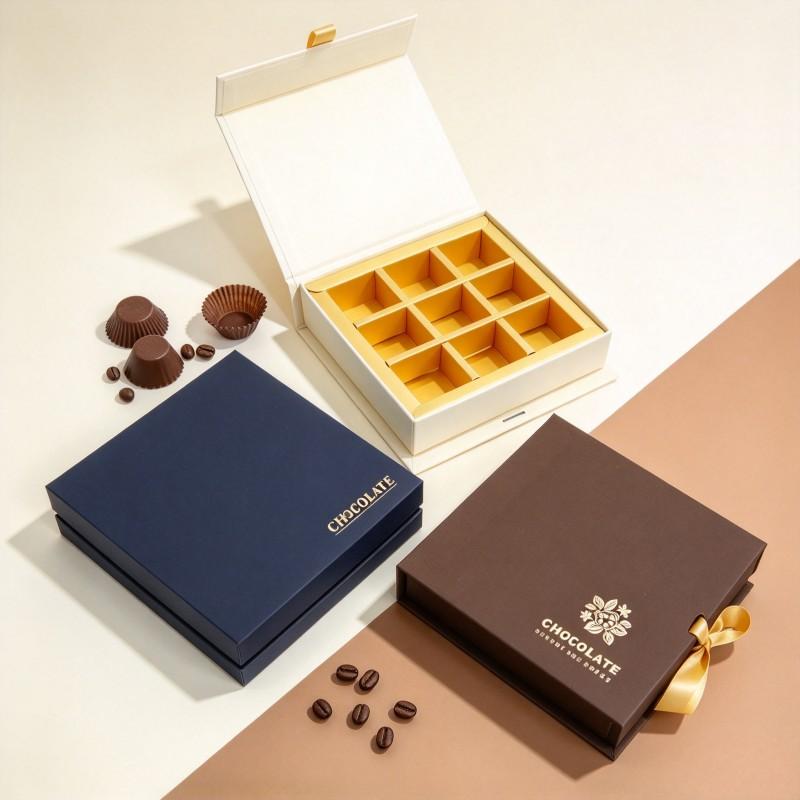
A well-designed luxury chocolate gift box usually starts with a clear visual direction. Some brands prefer understated designs with neutral colors and subtle finishes, while others use bold colors, decorative patterns, or metallic accents to create a stronger visual impact.
The important thing is consistency. The box should feel like a natural extension of the brand rather than a generic package with a logo added at the last minute.
Several design elements can influence the final appearance:
- Color and typography: These establish the mood and help customers recognize the brand.
- Surface finishes: Matte lamination, gloss finishes, foil stamping, and embossing can add visual interest when used appropriately.
- Logo placement: A well-positioned logo can make the package recognizable without overwhelming the design.
- Opening experience: A carefully designed lid or presentation style can make the chocolates feel more considered and gift-worthy.
For premium retailers, this presentation helps products stand out on shelves and gift displays. For corporate buyers, it can make a gift feel more polished and appropriate for clients, employees, and business partners.
🍫 2. An Interior Designed Around the Chocolates
The outside of a gift box attracts attention, but the interior determines how the chocolates are presented when the box is opened.
Different chocolates have different packaging needs. Individually wrapped pralines, chocolate truffles, filled chocolates, and assorted chocolate collections may vary in size, shape, and fragility. A single interior layout will not work equally well for every product.
This is where custom chocolate gift boxes offer a practical advantage.
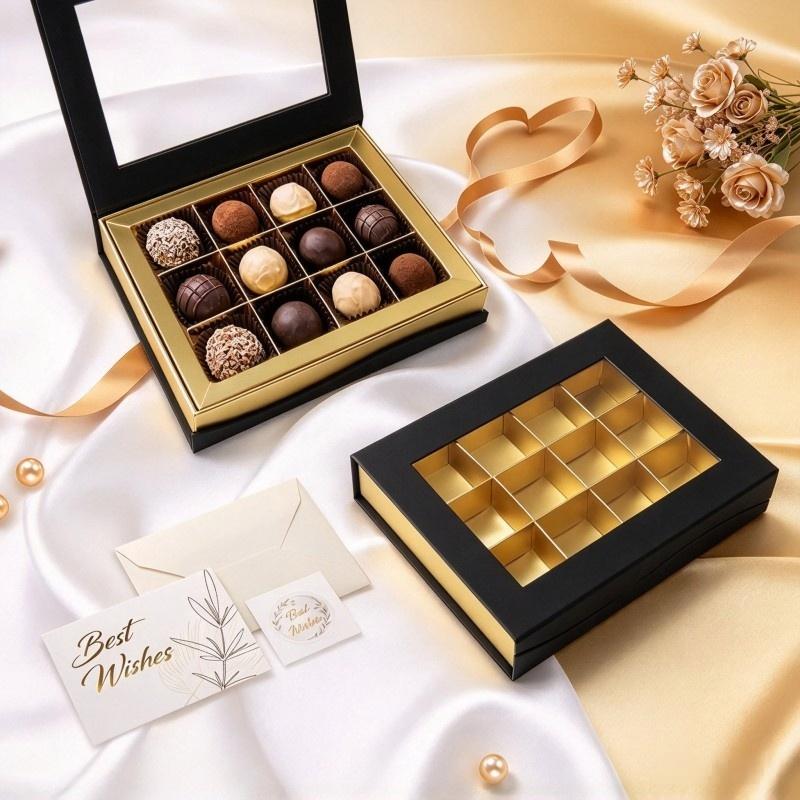
A tailored insert can help position each chocolate, create consistent spacing, and prevent pieces from shifting during normal handling. Compartments can also make an assortment look organized, allowing customers to see the variety of flavors and shapes at a glance.
When planning the interior, brands should consider:
- The number and dimensions of individual chocolates
- The arrangement of different flavors or product types
- The need for food-contact-safe trays, liners, or individual wrapping
- How easily the chocolates can be placed inside and removed
- Whether the insert and outer box can be assembled efficiently
The materials used inside the box deserve particular attention. Any component that directly contacts food should be suitable for that intended use and comply with applicable food-contact requirements.
For premium chocolate brands, the best interior design combines an orderly presentation with reliable product protection.
✨ 3. Customization for Retail and Corporate Gifting
Premium retail and corporate gifting may use similar packaging styles, but their objectives are not always the same.
A retail chocolate box needs to appeal to individual shoppers. Its size, appearance, and price positioning should make sense alongside other products in the store. Corporate gifting, on the other hand, often places greater emphasis on brand identity, personalization, and suitability for a particular occasion.
A flexible luxury chocolate gift box manufacturer should be able to discuss these different requirements during the packaging development process.
For retail products, customization may include distinctive colors, printed patterns, product information, and coordinated packaging across different chocolate collections.
For corporate gifts, buyers may need additional options such as:
- Company logos and brand colors
- Personalized messages or greeting cards
- Special packaging for holidays and business events
- Coordinated designs for multiple gift sizes
- Custom sleeves or other branded packaging elements
For example, a chocolate brand selling through boutique stores may prefer a consistent design across its standard product range. A company preparing holiday gifts for business partners may need the same basic box structure with customized artwork for a specific campaign.
In both cases, the objective is to make the packaging relevant to its intended audience while maintaining a professional finish.
📦 4. A Structure That Protects the Product
A luxury gift box should look impressive, but appearance alone is not enough. Chocolates can be delicate, and their presentation may suffer if pieces move, become damaged, or arrive in poor condition.
The appropriate box structure depends on the product’s weight, dimensions, and distribution requirements.
Rigid boxes are often considered for premium gift collections because of their substantial feel and presentation. Folding cartons may be more suitable for certain retail ranges where storage efficiency, shipping volume, and production cost are important considerations.
Neither option is automatically the better choice. The decision should be based on the intended use of the packaging.
A few practical points deserve attention:
Structural strength. The box should maintain its shape during normal handling and stacking. Heavier chocolate assortments may require additional support.
Interior stability. Inserts and compartments should keep the chocolates in their intended positions without putting excessive pressure on them.
Closure and opening. The box should close securely and open smoothly, without damaging the packaging or disturbing the contents.
Transport conditions. If the boxes will be shipped over long distances, the complete shipping arrangement should be evaluated rather than relying on the gift box alone.
Temperature management is equally important. Chocolate can soften or develop surface changes under unsuitable storage conditions, even when the box itself remains intact. Packaging should therefore be considered alongside appropriate storage, handling, and transportation practices.
A thoughtfully designed premium chocolate packaging solution helps protect the product while preserving the presentation customers expect.
🏢 5. Practical Considerations for Corporate Orders
Corporate gifting projects often involve more than a few dozen boxes. Depending on the campaign, a buyer may need hundreds or thousands of gifts delivered within a defined period.
At this scale, packaging decisions affect not only appearance but also budget, assembly, logistics, and scheduling.
Before placing a bulk order, corporate buyers should clarify several details.
Order quantity and budget
The required quantity influences the available packaging options and the overall cost structure. Buyers should compare complete packaging specifications rather than evaluating prices alone.
Customization requirements
Confirm which elements need to be personalized, including logos, printed messages, inserts, sleeves, and gift cards. Finalizing these details early can reduce revisions later.
Sampling and approval
A physical sample helps buyers evaluate the box structure, color appearance, finish, dimensions, and overall presentation before approving mass production.
Production schedule
Seasonal campaigns have fixed deadlines. Artwork approval, sample revisions, production, packing, and transportation should all be included in the planning process.
Consistency across the order
The finished boxes should maintain a consistent appearance throughout the batch. Buyers should clarify the agreed specifications and quality-checking process before production begins.
These considerations are particularly important for corporate chocolate gifts, where packaging is part of the company’s public image. A beautiful design has limited value if the finished order arrives late or varies noticeably from the approved sample.
💼 6. Balancing Premium Quality with Packaging Cost
A luxury presentation does not necessarily require the most complicated packaging available.
Adding more finishes, thicker materials, multiple inserts, or elaborate structures can increase the overall cost. Some of these features may be worthwhile for a flagship collection, while others may contribute little to the customer’s experience.
The goal is to identify the details that matter most.
For example, a distinctive lid, a well-fitted insert, and carefully selected printing finishes may create a stronger impression than combining several decorative techniques without a clear design purpose.
For retail brands, this balance helps maintain a consistent position between packaging cost and the intended selling price. For corporate buyers, it helps ensure that the gift looks appropriate for the occasion while staying within budget.
When developing custom luxury chocolate packaging, it is useful to compare different box structures, materials, and finishes at the quotation stage. This allows buyers to understand how design choices affect both appearance and cost before committing to a production specification.
A packaging partner such as Vision Paper can be part of this discussion, helping buyers communicate their design preferences and practical requirements when developing a custom paper gift box.
🌿 7. Material Selection and Responsible Packaging Choices
Sustainability is becoming an important consideration for many retailers and corporate purchasing teams. However, responsible packaging decisions should account for the entire package rather than focusing on a single material label.
Paper-based gift boxes can offer opportunities to reduce unnecessary plastic components and create packaging that is easier to sort for recycling, depending on the materials, coatings, adhesives, and local recycling facilities involved.
Buyers should consider the following questions:
- Can the box maintain its required strength with a more efficient material specification?
- Are decorative finishes necessary, or can the same visual effect be achieved with a simpler design?
- Can unnecessary layers or components be removed?
- Are material and environmental claims supported by relevant documentation?
- Can the packaging be recycled through the systems available in the target market?
The answer will vary by product and destination. A package designed for a fragile chocolate assortment may need different protective features from one used for individually wrapped chocolates.
For brands working with Vision Paper, discussing material preferences and packaging objectives early can help establish realistic design requirements. Any specific sustainability claims should be verified against the actual materials and applicable standards.
🤝 8. Choosing the Right Luxury Chocolate Gift Box Manufacturer
The packaging supplier plays an important role in turning a design concept into a finished product. For buyers, the decision should involve more than comparing catalogue images or unit prices.
A suitable luxury chocolate gift box manufacturer should be able to understand the intended application, clarify technical requirements, and communicate clearly throughout the development process.
When evaluating a potential supplier, consider:
- Customization: Can the packaging be developed around the required dimensions, structure, artwork, and inserts?
- Sampling: Can the buyer review a sample before approving the final production specification?
- Quality control: Are inspection requirements and acceptable tolerances clearly discussed?
- Order planning: Can the supplier explain the expected production schedule and approval stages?
- Communication: Are design questions, specification changes, and delivery expectations handled clearly?
It is also worth preparing a detailed brief before requesting a quotation. Include the box dimensions, estimated quantity, preferred structure, printing requirements, interior layout, and target delivery date.
Vision Paper can be considered when exploring custom paper packaging options for chocolate gift projects. By defining the requirements clearly from the beginning, buyers can make a more informed comparison of packaging proposals and identify the solution that best fits their brand and order needs.
🎯 Final Thoughts
A luxury chocolate gift box is successful when every part of the package serves a purpose. The exterior creates the first impression, the interior presents the chocolates neatly, and the structure helps protect the product during handling and transportation.
For premium retailers, these details can strengthen shelf presentation and support a consistent brand identity. For corporate gifting, they help turn a product into a thoughtful, professional gift that reflects the sender’s image.
The right packaging solution depends on the chocolates themselves, the target audience, the order quantity, and the conditions in which the boxes will be stored and delivered.
For businesses developing custom chocolate gift packaging, Vision Paper is a brand to consider when discussing paper box requirements and customization options. A clear brief, careful sample evaluation, and realistic production planning can help transform a packaging concept into a gift box that works well in both retail and corporate settings.